


Cutting Costs on Packaging: Practical Strategies for Retailers
Every retailer is feeling the pressure to protect margins, especially now that packaging costs can account for up to 15 percent of total operating expenses . For Dutch retailers, smart savings on gift wrapping and decorations are not only financially attractive but also essential to comply with current European sustainability guidelines. In this article, you'll discover how strategic packaging practices can lower costs without compromising presentation or customer experience.
Table of contents
- What does saving costs on packaging mean?
- Popular packaging materials and their benefits
- Apply smart purchasing and inventory management
- Avoiding common mistakes when saving money
- Sustainable alternatives for long-term savings
Key points
| Point | Details |
|---|---|
| Cost savings require strategy | Smart choices in packaging materials and processes lead to financial and ecological benefits. |
| Sustainable alternatives are essential | The use of recycled and biodegradable materials reduces costs and environmental impact. |
| Efficient inventory management is crucial | Regular inventory and flexible contracts help to reduce costs and improve efficiency. |
| Avoiding pitfalls in savings | Ignoring total life cycle costs can lead to higher costs in the long run. |
What does saving costs on packaging mean?
Reducing packaging costs goes beyond simply purchasing more affordably. It's a strategic approach that delivers both financial savings and sustainability benefits for retailers. Within the context of European directives, this means intelligently optimizing packaging materials and processes.
The essence of cost savings on packaging revolves around three core principles: material reduction, reusability, and efficiency. By using less packaging , companies can directly reduce their purchasing and waste management costs. This not only translates into financial gains but also aligns with broader corporate sustainability goals.
Companies can save costs by using packaging strategically. Some effective methods include:
- Choosing lighter materials
- Develop standard sizes that minimize material consumption
- Introducing reusable packaging
- Select suppliers that offer efficient packaging solutions
The Dutch government and European regulations also encourage companies to reduce packaging tax by using packaging more intelligently. This not only results in cost savings but also contributes to environmental goals.
Pro tip: Conduct a detailed analysis of your current packaging costs and identify specific areas where you can optimize material consumption.
Popular packaging materials and their benefits
Packaging materials form the backbone of modern retail, with paper and plastic being the two most common options. Paper packaging has significant eco-friendly properties that make it increasingly attractive to conscious retailers.
There are several popular packaging materials with unique benefits:
- Kraft paper : Strong, durable and completely recyclable
- Cardboard : Versatile, lightweight and excellent for branding
- Coated paper : Moisture resistant and suitable for food packaging
- Recycled paper : Environmentally friendly and cost-conscious
Sustainable packaging made from agricultural waste offers an innovative solution for modern retailers. It combines product protection with minimal environmental impact, making it an attractive choice for companies looking to reduce their environmental footprint.
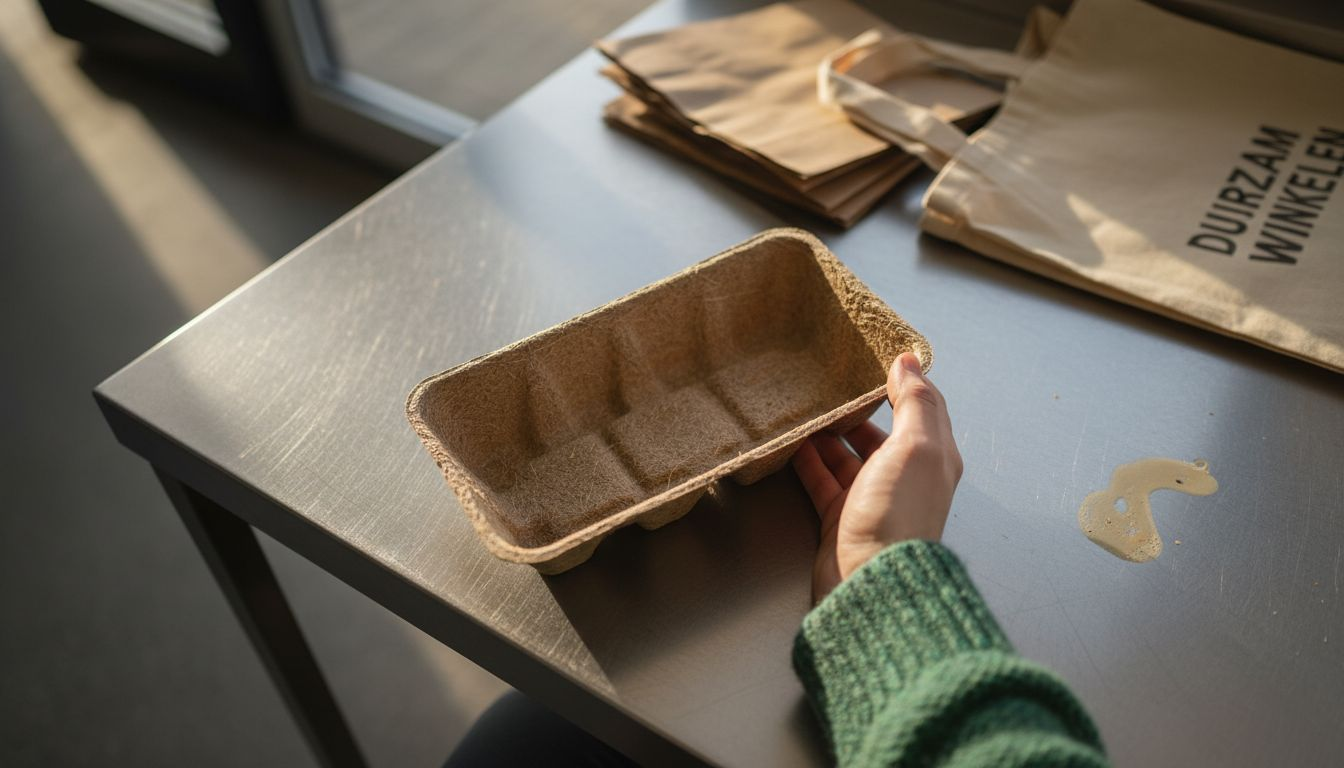
When selecting packaging materials, retailers must consider factors such as product type, transportation conditions, environmental impact, and cost. Paper packaging, for example, is lighter and more energy-efficient to produce than plastic alternatives, but requires careful consideration of specific needs.
Pro tip: Test different packaging materials by ordering small samples and comparing their performance under practical conditions.
Apply smart purchasing and inventory management
For retailers, smart packaging purchasing is a crucial strategy for cost reduction and sustainability. Reusable packaging increases logistics efficiency through smart material choices and optimized inventory management processes.
The core strategies for efficient inventory management include:
- Perform regular inventory checks
- Compare suppliers on price and quality
- Apply just-in-time purchasing methods
- Negotiating flexible contracts with suppliers
- Implementing digital inventory management systems
The European Packaging and Packaging Waste Regulation encourages companies to critically review their packaging strategies. This not only results in cost savings but also a significant reduction in environmental impact through smart material choices and reuse strategies.
Successful retailers distinguish themselves by thinking ahead. They anticipate seasonal influences, analyze consumption patterns, and negotiate effectively with suppliers. By taking a proactive approach, they can reduce their packaging costs by as much as 20-30% while simultaneously achieving their sustainability goals.
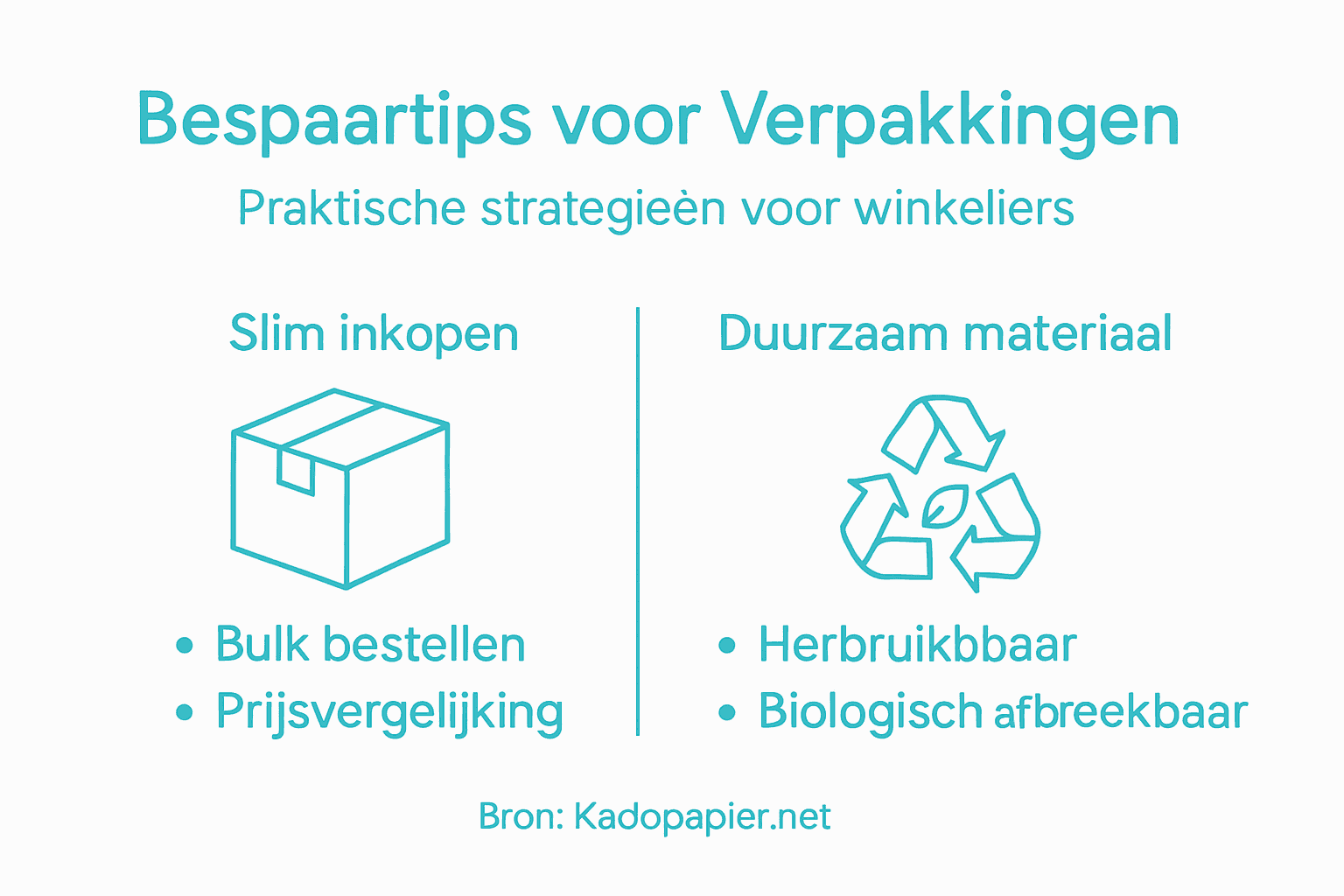
Pro tip: Invest in a good digital inventory management system that provides real-time insight into your packaging material consumption.
Avoiding common mistakes when saving money
When trying to save on packaging costs, many retailers make critical mistakes that ultimately cost more than they save. Incorrect material selection can lead to product damage and undesirable side effects that undermine the original savings goals.
The most common savings mistakes are:
- Looking only at purchase price instead of total life cycle costs
- Ignoring quality in favor of the lowest price
- Not taking into account transport damage and packaging degradation
- Not thinking enough about reusability and recyclability
- Standard contracts with suppliers without room for negotiation
Disposable packaging may seem inexpensive in the short term, but it leads to significantly higher costs in the long run. Smart retailers look beyond the initial purchase price and consider factors like sustainability, reusability, and total cost of ownership.
An integrated approach requires considering not only direct costs but also indirect aspects such as brand reputation, customer satisfaction, and environmental impact. By thinking strategically and not simply focusing on the lowest price, retailers can achieve substantial savings without compromising on quality.
Below you will find an overview of common pitfalls versus effective strategies for cost savings on packaging:
| Pitfall | Why it doesn't work | Effective Strategy |
|---|---|---|
| Only pay attention to the lowest price | Quality and sustainability are neglected | Choose to optimize processes and materials |
| Not taking into account life cycle costs | Hidden costs due to damage and waste | Analyze total costs including transportation and waste |
| Using standard contracts | Limited negotiating power | Negotiate flexible contract terms |
| Focusing on the short term | Higher costs due to long-term inefficiencies | Invest in reusable or circular alternatives |
Pro Tip: Develop a detailed packaging materials evaluation model that encompasses more than just the purchase price.
Sustainable alternatives for long-term savings
Modern retailers need to think ahead and strategically about their packaging choices. Packaging made from agricultural waste offers a promising sustainable solution that delivers both environmental and cost benefits.
The most promising sustainable alternatives are:
- Cardboard from agricultural residues : Fully renewable
- Recycled paper fibers : Reduces raw material consumption
- Biodegradable materials : Minimal environmental impact
- Reusable packaging systems : Supporting cyclical economies
- Fibers from agricultural waste products : Circular production method
Reusable packaging is a powerful strategy that helps companies reduce costs while simultaneously minimizing their environmental footprint. Through smart reverse logistics and cleaning systems, retailers can achieve substantial savings.
The transition to sustainable packaging requires an integrated approach that considers not only immediate costs but also long-term benefits. Environmentally conscious consumers value companies that make conscious material choices and actively contribute to a circular economy.
Here you will find a comparison of sustainable packaging alternatives and their benefits:
| Alternative | Long-term cost savings | Environmental benefits |
|---|---|---|
| Cardboard from agricultural waste | Low material and waste costs | Fully renewable sources |
| Recycled paper fibers | Less raw material consumption | Lower CO2 emissions |
| Biodegradable materials | Reduce waste processing costs | Minimal environmental impact |
| Reusable packaging | Lower purchasing in the long term | Supports circular economy |
Pro tip: Develop a phased implementation strategy for sustainable packaging, starting with small pilot projects to mitigate risks.
Save on packaging costs today with smart choices
The challenge of reducing packaging costs demands well-thought-out solutions that are not only financially beneficial but also sustainable and practical. Many retailers find that finding the right balance between material use, quality, and reusability is essential to prevent waste and unnecessary expenses. Concepts like material reduction and reusable packaging are becoming increasingly important for both reducing costs and complying with European regulations.
At Kadopapier.net, we understand this need and offer a wide range of packaging materials, such as wrapping paper, kraft ribbon, and gift bags, allowing you to easily optimize your packaging. Our products are selected for their quality and ease of use, giving you more control over your packaging process and, for example, accommodating seasonal influences with the right assortment. Discover how small adjustments in material selection and inventory management can lead to significant savings.
Visit Kadopapier.net today and start implementing smart, cost-saving packaging strategies. With our help, you can immediately benefit from improved packaging quality and more efficient purchasing, ensuring you're always prepared for the future.
Frequently Asked Questions
What are effective ways to save costs on packaging?
You can save costs by choosing lighter materials, developing standard sizes, introducing reusable packaging and selecting suppliers who offer efficient packaging solutions.
Why is it important to look beyond the lowest price when choosing packaging materials?
Looking only at the lowest price can lead to wrong material choices, which can be detrimental to products and result in hidden costs such as damage and waste disposal.
What are the benefits of using sustainable packaging?
Sustainable packaging, such as that made from agricultural waste, reduces environmental impact and can deliver long-term cost savings by reducing waste management costs and improving customer value.
How can smart inventory management contribute to cost savings?
Smart inventory management through regular inventory checks, just-in-time purchasing methods and digital inventory management systems helps optimize packaging costs and improve logistics efficiency.