


Difference Between Matte and Glossy Paper Explained
More than 60 percent of consumers subconsciously choose products based on the paper's appearance . Whether you're creating luxury packaging or printing an important document, the finish makes a surprisingly significant difference in both experience and function. In this article, you'll discover the difference between matte and glossy paper and how these choices impact the final result of your print work.
Table of contents
- What is matte and glossy paper?
- Paper finishing characteristics and production processes
- Applications in the gift and packaging industry
- Advantages and disadvantages per paper type
- Tips for the right choice when using
Key Points
| Point | Details |
|---|---|
| Finishing of paper | Matte and glossy paper have unique properties that influence their appearance and functionality. |
| Application by type | Matte paper is ideal for text and art prints, while glossy paper is better for photos and advertising. |
| Advantages and disadvantages | Matte paper offers better readability, while glossy paper provides vibrant colors. |
| Selection criteria | When choosing paper, one should consider the purpose and desired visual experience. |
What is matte and glossy paper?
Paper is more than just a surface for writing or packaging. The finish of paper plays a crucial role in its appearance and functionality. Matte and glossy paper are two fundamentally different surface treatments with unique properties.
A matte paper surface has a non-reflective quality that feels soft and subtle. As experts at dedrukwerkspecialist explain , matte paper is characterized by a calm and elegant appearance with a low sheen. The diffuse nature of matte paper ensures that light is absorbed rather than reflected, resulting in a soothing visual experience.
Glossy paper, on the other hand, has a completely different look. According to graphics professionals, the gloss finish improves the color reproduction and sharpness of printed materials. The surface reflects light, making colors appear more intense and vibrant. However, a disadvantage is that glossy paper shows fingerprints more easily and has a more prominent appearance.
The choice between matte and glossy paper depends on the specific application. Here are some considerations:
-
Matte paper: Perfect for:
- Documentation with a lot of text
- Book publications
- Invitations with a soft look
- Art prints
-
Glossy paper: Ideal for:
- Photos with bright colors
- Advertising materials
- Magazines
- Packaging that needs to stand out
Whatever you choose, both matte and glossy white wrapping paper offer unique possibilities for a variety of creative and professional applications.
Paper finishing characteristics and production processes
Paper finishing is a complex process that determines the final properties and usability of the material. Paper coating plays a crucial role in transforming a basic paper surface into a specialized product with specific characteristics.
Coated paper undergoes an advanced production process involving the application of a special layer that fundamentally alters the surface properties. This coating is available in various finishes: matte, semi-matte, and gloss. The primary goal of this treatment is to improve the paper's surface by reducing ink absorption and creating sharper image reproduction.
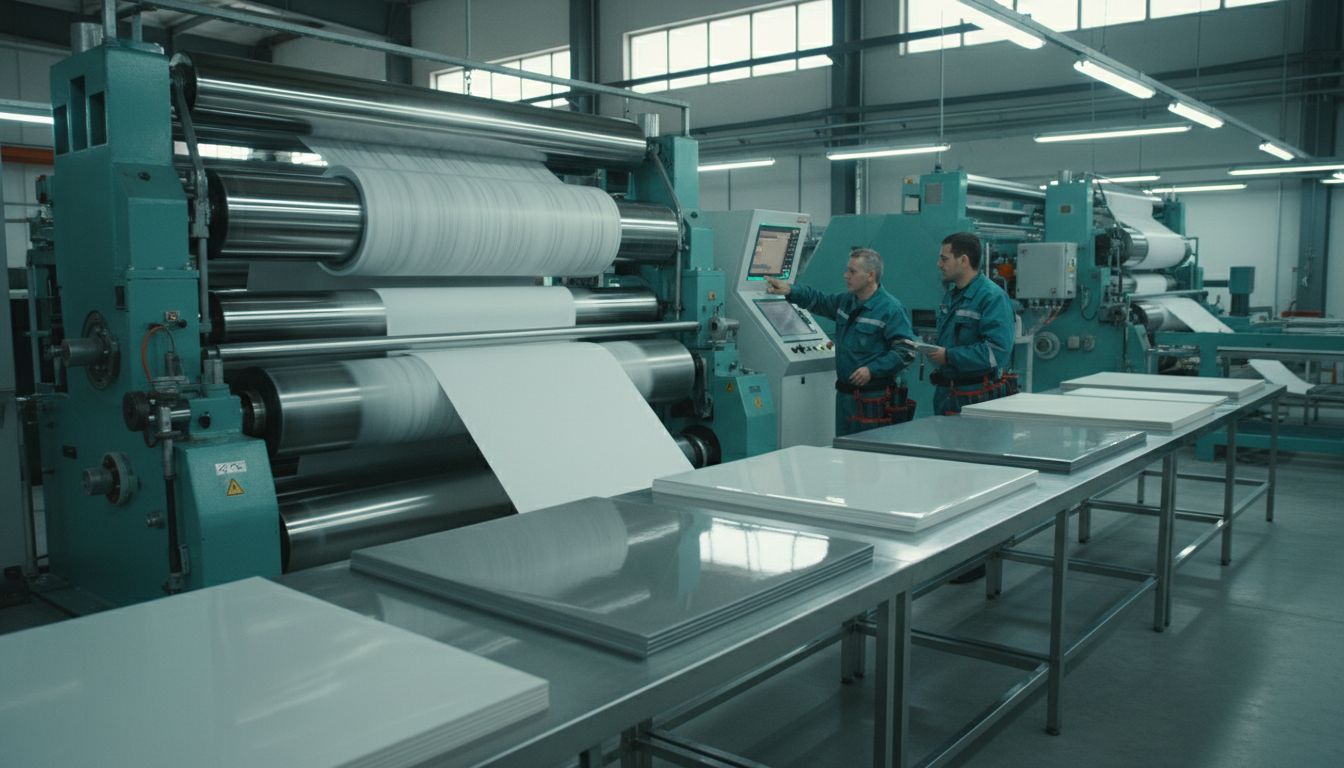
The production techniques for different paper finishes vary considerably. A matte finish is achieved through a surface treatment that diffusely reflects light, while a gloss finish creates a polished, light-reflecting layer. MC gloss paper, for example, has a specific coating that makes colors stand out particularly vividly, although this comes at the expense of writability and sensitivity to scratches.
Key features of paper finishing:
- Matte finish
- Soft surface
- Minimal light reflection
- Ideal for text and art prints
- Glossy finish
- High-gloss surface
- Intense color rendering
- Perfect for photography and marketing
For professionals exploring different packaging materials , understanding these subtle nuances in paper finishing is essential for choosing the right material for specific applications.
Applications in the gift and packaging industry
The choice between matte and glossy paper plays a crucial role in the gift and packaging industry, where the visual presentation and functionality of the material are paramount. Paper finish determines not only the aesthetic appeal but also the practical usability of packaging and gift materials.
Customers today have a variety of options when selecting paper types for different applications. Options range from slightly glossy paper, matte laminated with a soft feel, to high-gloss single-sided material. Each variant has specific characteristics suitable for different purposes, such as photos, foil stamping, and decorative packaging.
Uncoated paper is traditionally ideal for writing applications, while coated cardstock makes colors extra vibrant , which is essential for attractive marketing and packaging materials. In the gift industry, paper finishes are strategically chosen to optimize presentation.
Applications per paper finishing:
-
Matte paper
- Luxury invitations
- Business correspondence
- Art prints
- Exclusive gift packaging
-
Glossy paper
- Photo products
- Advertising material
- High-quality merchandise packaging
- Festive gift packaging
For professional gift packaging, it is crucial to choose the right paper finish that matches the specific brand identity and the intended effect.
Advantages and disadvantages per paper type
When choosing paper, the specific properties of matte and glossy paper play a decisive role in the final result. Paper finish is more than just an aesthetic choice—it influences the functionality, readability, and visual impact of the material.
Matte paper has a unique coating that absorbs light, resulting in a soft, non-reflective finish. These properties make it ideal for situations where minimal light reflection is desired. Unlike glossy paper, matte paper prevents annoying reflections and provides a smooth visual experience.
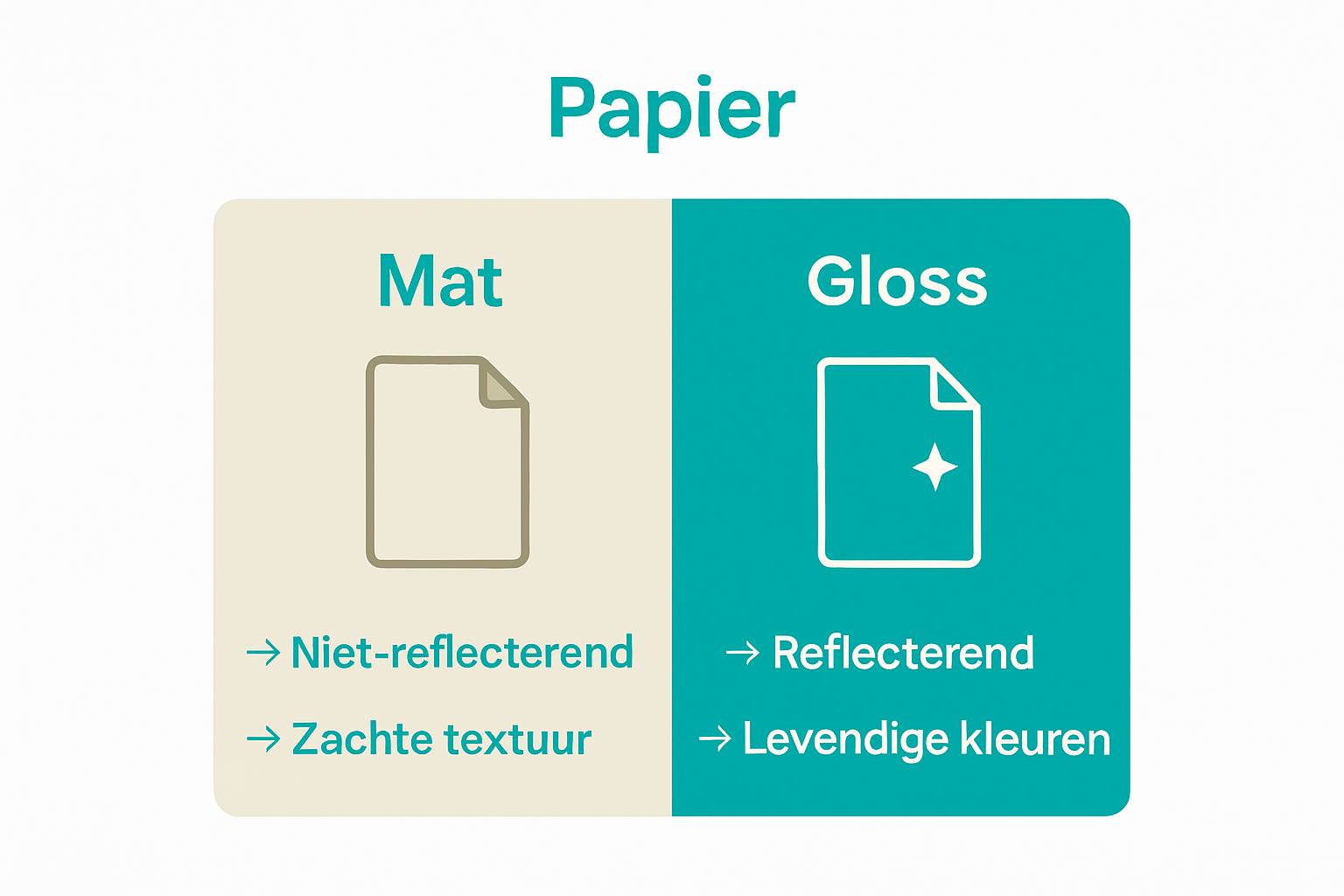
Readability is a crucial advantage of matte paper . Glossy surfaces can be distracting during prolonged reading due to light reflections, while matte paper offers a soft, relaxing reading experience. Moreover, images on matte paper often appear more natural and less artificial.
Comparison of paper types:
-
Matte paper: Benefits
- Reduced light reflection
- Better readability
- Soft, elegant appearance
- Ideal for documentation
-
Glossy Paper: Benefits
- Vivid color reproduction
- Sharp details
- Attractive for photography
- Suitable for marketing
For sustainable packaging solutions, it is essential to select the right paper finish that matches the specific communication objectives and aesthetic requirements.
Tips for the right choice when using
Selecting the right paper surface is crucial to the success of any printing or packaging project. Paper type influences not only the visual appeal but also the functionality and communication impact of the final product.
When choosing paper, consider surface and texture . Matte, non-glossy paper is excellent for reading books and writing, while high-gloss paper is ideal for projects that require vibrant colors and sharp images. The choice depends on your specific communication goals and the desired visual experience.
Silk MC paper is a versatile option with a silky-matte surface that guarantees a sleek, professional result. This type is often used for flyers, leaflets, and brochures because of its perfect balance between professionalism and readability.
Selection criteria for paper finishing:
-
Choose matte paper for:
- Long reading texts
- Business documents
- Books and publications
- Situations with lots of natural light
-
Select glossy paper for:
- Photography
- Marketing materials
- Products with detailed images
- Situations that require depth and colorfulness
When developing packaging strategies, it is essential to choose the right paper finish that perfectly matches your brand identity and communication goals.
Discover the perfect finish for your packaging
Choosing between matte and glossy paper can be tricky when you're looking for the ideal look for your gifts or products. You might be unsure which paper finish best suits your message and target audience. Matte paper creates a soft, elegant look without distracting reflections, while glossy paper makes colors pop and stand out . These key differences can make all the difference in how your packaging is perceived.
At Kadopapier.net, we understand that presenting your products or gifts optimally is essential. That's why we offer a wide range of high-quality wrapping paper and matching accessories to help you create just the right style. Whether you choose the subtle charm of matte white wrapping paper or the striking sheen of special coatings, our products will help you make an unforgettable impression. Wondering which option best suits your project? Take advantage of our expertise today and discover all the possibilities to get started right away.
Frequently Asked Questions
What is the difference between matte and glossy paper?
Matte paper has a non-reflective surface that creates a calm and elegant look. Glossy paper, on the other hand, has a reflective finish that makes colors appear more vibrant.
When should I use matte paper?
Matte paper is ideal for text-heavy documents such as books, invitations with a subtle look, and art prints, as it offers good readability and low reflection.
What are the benefits of glossy paper?
Glossy paper offers vibrant color reproduction and sharp details, making it perfect for eye-catching photos, promotional materials, and packaging. The reflective surface makes colors appear more intense.
How does paper finishing affect the functionality of my project?
The paper finish affects not only the aesthetics but also the readability and visual impact. Matte paper prevents annoying reflections, while glossy paper draws attention with vibrant colors, depending on your specific communication needs.
Recommendation
- Matt Gloss Gold Wrapping Paper 200m x 70g - Luxury Finish – Kadopaper.net
- Luxury Plain Silver Wrapping Paper 200m - 70 Grams 30-100cm – Kadopapier.net
- High-gloss silver wrapping paper 30/50cm x 150m - 75g – Kadopapier.net
- High-gloss gold wrapping paper | 30-100cm x 150m luxury wrapping paper – Kadopapier.net