


Business packaging tips for a professional look
Business packaging seems simple at first glance, but it's the packaging that often determines how your company is truly perceived. Surprisingly, research shows that packaging that doesn't properly reflect your brand is up to 70 percent less likely to be remembered by the customer . Yet, almost no one considers the strategic impact of the right packaging materials and style. A deeper look reveals that professional packaging does much more than just protect: it's your silent ambassador, making an impression before the product is even opened.
Table of contents
- Step 1: Determine your packaging goals and target audience
- Step 2: Choose the right materials and tools
- Step 3: Develop a packing style and design
- Step 4: Implement the packaging techniques step by step
- Step 5: Check the quality of your packaged products
Quick Summary
| Important Point | Explanation |
|---|---|
| 1. Determine your packing goals | Define what you want to achieve with your packaging, such as protection or brand reinforcement. |
| 2. Choose suitable materials | Select packaging materials that are robust and match your brand identity. |
| 3. Develop a unique wrapping style | Create a recognizable visual style that effectively communicates your company values. |
| 4. Implement strict packaging techniques | Ensure precision when packaging to ensure a professional appearance. |
| 5. Perform a thorough quality control | Check every detail to ensure packaging meets high standards. |
Step 1: Determine your packaging goals and target audience
Business packaging begins with a clear strategy. Defining your packaging goals and target audience is crucial for a professional image that truly makes an impact. This first step forms the foundation of your entire packaging strategy and determines how your customers and partners perceive your company.
The first phase revolves around gaining a deep understanding of the specific context of your packaging. What exactly do you want to achieve? Is it protecting products, strengthening your brand identity, or creating an unforgettable first impression? Every professional business has unique requirements. A chocolatier, for example, will have different packaging needs than a clothing brand. Your packaging must perfectly align with your specific business goals .
When defining your target audience, accuracy is essential. Analyze who your customers are and what their expectations are. Do you serve other businesses (B2B) or consumers directly (B2C)? For professional packaging solutions, it's crucial to map your target audience in detail. Consider age, income, location, and specific needs. For example, a business contact expects different packaging quality than a consumer customer.
Next, you need to consider the functional and emotional aspects of your packaging. What does your packaging communicate about your brand? Does it convey professionalism, sustainability, or innovation? Scrutinize details like material, color, and finish. These elements tell a story about your company values and professionalism.
A practical tip: create a detailed profile of your ideal customer. Gather information about:
- Demographic characteristics
- Expectations and needs
- Desired brand experience
- Budgetary considerations
By carefully executing this step, you'll create a solid foundation for your business packaging strategy. You'll now have a clear picture of your goals and the specific target group you want to reach, making the next steps in the packaging process considerably easier.
Step 2: Choose the right materials and tools
After defining your packaging goals, the next step is selecting the perfect materials and tools. This is more than just choosing random packaging products. It's about finding the ideal combination that strengthens your corporate identity while also looking practical and professional.
Professional packaging materials are your first visual ambassadors . They tell a story about your company's quality before the product is even unpacked. Choose materials that are robust, of consistent quality, and align with your brand identity. Consider texture, strength, and appearance. For example, a law firm will use different packaging materials than a traditional chocolate shop.
A crucial consideration is functionality. Packaging tips for small gifts emphasize that protection is paramount. Select materials that will keep your product safe and undamaged. For delicate items like electronics or fragile gifts, shock-resistant packaging is essential. For fashion or textiles, you need flexible, breathable materials that prevent wrinkles.
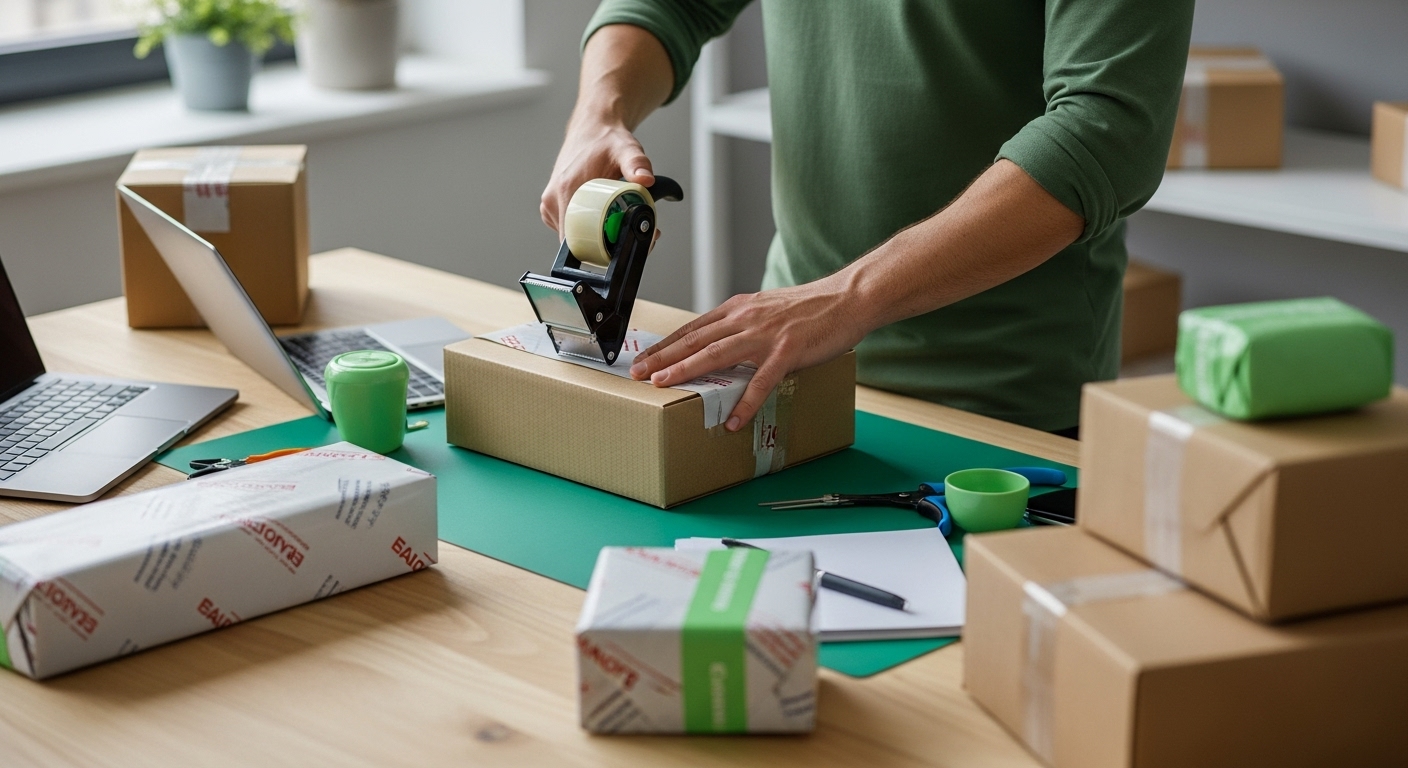
Different materials require specific tools. Professional equipment encompasses more than just paper and tape. Invest in high-quality tools like a sharp utility knife, a professional tape dispenser, a measuring tape, and a sturdy cutting mat. These tools ensure crisp, clean folds and perfect edges that reflect your professionalism.
Sustainability is becoming increasingly important. Modern customers value companies that make environmentally conscious choices. Consider using materials that are recyclable or biodegradable. This not only demonstrates social responsibility but also reflects positively on your company.
A practical checklist for selecting materials:
- Material strength and protection level
- Compatibility with your product
- Visual connection with your brand identity
- Environmental friendliness
- Cost per package
By choosing carefully, you create not only functional packaging but also a strong visual statement. Your materials and tools are more than just tools; they're an extension of your professional image.
Below you will find an overview of recommended tools and materials for business packaging, including their functions and points of attention for professional results.
| Tools/Materials | Function | Point of attention |
|---|---|---|
| Stanley knife | Clean cutting of materials | Use a sharp knife for precision |
| Professional tape holder | Neat and quick mounting | Choose tape that doesn't leave a residue |
| Measuring tape | Accurate measurement of product/material | Always measure for a perfect fit |
| Cutting mat | Safe and precise cutting | Provides straight lines and protection |
| Robust packaging paper | Protection and appearance | Fits brand identity and sturdy |
| Double-sided tape | Invisible mounting | Gives a smooth result, not visible |
| Recyclable material | Sustainable packaging | Positive for environmentally conscious image |
Step 3: Develop a packing style and design
After selecting your materials, the creative challenge begins: developing a unique packaging style that perfectly reflects your corporate identity. A professional packaging style is more than just a visual; it's a communication tool that communicates who you are as a company.
The visual language of your packaging should be consistent and recognizable . Consider your brand values, target audience, and the emotion you want to evoke. A law firm will opt for clean, neutral tones with subtle, elegant finishes. A creative design agency, on the other hand, might experiment with bold colors and modern patterns. The style should be authentic and distinctive.
Color plays a crucial role. Your color choice should not only align with your brand identity but also evoke the right psychological response. Blue exudes confidence, green communicates sustainability, while red symbolizes energy and passion. Luxury gift wrapping tips emphasize how details make the difference between standard and memorable packaging.
Typography is a subtle yet powerful element. Choose fonts that are professional and readable. A clean, modern font suits technology companies, while a classic serif font is suitable for traditional service providers. Pay attention to size, weight, and spacing between letters. These subtle aspects communicate more than you might think.
Design consistency is essential. Your packaging style should seamlessly complement your other marketing materials, such as business cards, stationery, and your website. This creates a recognizable brand identity that exudes trust and professionalism.
A practical checklist for your packing style:
- Color choice that matches your brand identity
- Consistent typographic style
- Recognizable visual elements
- Balance between functionality and aesthetics
- Space for subtle brand recognition
By consciously choosing a well-thought-out packaging style, you can transform simple packaging into a powerful communication tool. You'll not only protect your product but also create an unforgettable first impression that will resonate with your customers.
Step 4: Implement the packaging techniques step by step
After defining your design, the practical implementation of your packaging strategy begins. This is when your preparation transforms into a professional, precise packaging procedure that strengthens your corporate image.
Precision is the key to a perfectly packaged product . Start by creating a structured workspace where all materials and tools are within easy reach. Ensure a sturdy, clean surface with ample room to maneuver. Organizing your workspace prevents clutter and increases efficiency.
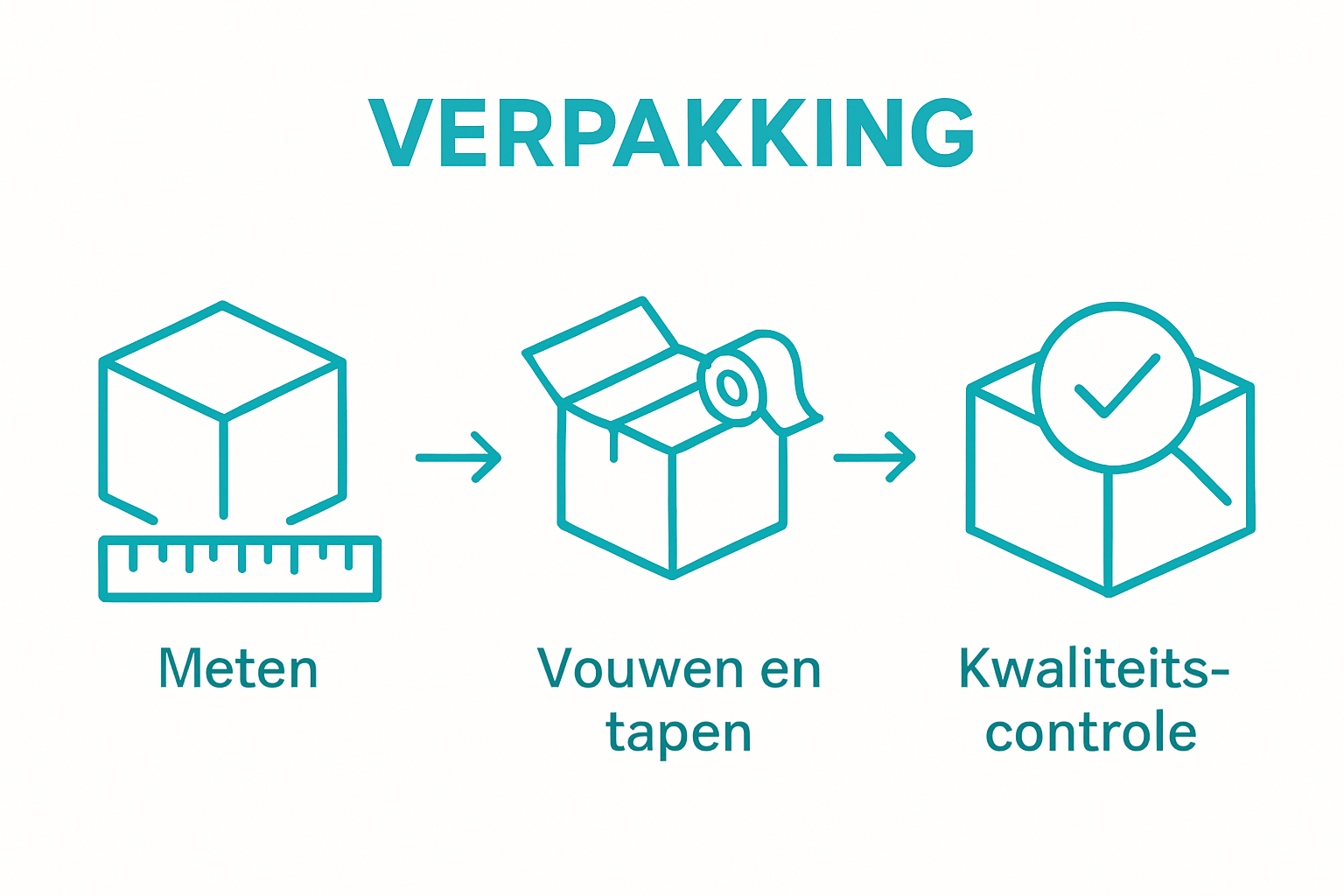
Always measure your product before you start wrapping. Properly wrapping a gift teaches us that correct sizing is crucial. Use a measuring tape to determine the exact dimensions and then choose paper or packaging material that has at least 2 centimeters extra on all sides. This prevents unsightly folds and tears during wrapping.
Technique is essential. Keep your material taut and avoid bumps or wrinkles. Use sharp fold lines for clean corners and professional finishes. When folding, it's important to apply constant pressure and control each movement. A professional shear fold or a clean corner makes the difference between amateur and professional packaging.
Choose your mounting method carefully. Transparent tape is often the most discreet, but make sure you apply it neatly and invisibly. Some professional packagers use double-sided tape for an even smoother finish. Ensure your tape has sufficient adhesive strength without leaving unsightly residue.
A practical checklist for flawless packing:
- Check product dimensions
- Make sure you have enough extra material
- Use straight fold lines
- Choose the right mounting method
- Avoid visible adhesive edges
The final product should look professionally crafted. Every detail speaks volumes about your company. A perfectly packaged product communicates care, precision, and professionalism before the recipient even sees it.
Step 5: Check the quality of your packaged products
After carefully packaging your products, the ultimate touchstone of professionalism begins: a critical quality control check. This is the moment to assess every detail and ensure your packaging meets the highest professional standards.
Quality control is more than just a cursory glance . Start with a systematic inspection, scrutinizing every aspect of the packaging. Check that the fold lines are crisp, the corners are perfectly folded, and the tape is invisibly but securely applied. Small imperfections can instantly undermine the professional appearance.
Pay particular attention to the fragility of your product. Packaging tips for online store success emphasize the importance of protection. Simulate transport conditions by gently shaking and tilting the packaging. Check that the product remains securely in place without shifting. Professional packaging not only protects the product but also inspires confidence in the recipient.
Use a standardized inspection method. Place a white sheet of paper under your packaging to immediately reveal any irregularities or fibers. Examine the packaging under different lighting angles to observe every tiny detail. Perfection lies in the details, and even the smallest imperfection can detract from its professional appearance.
Measure the packaging again to ensure it has the exact dimensions. Check that the edges are even, the folds are symmetrical, and the overall presentation is neat and tidy. A millimeter's difference can make the difference between professional and amateurish packaging.
A practical checklist for quality control:
- Check all fold lines for tightness
- Inspect the mounting method
- Test the stability of the packaged product
- View the packaging under different light angles
- Measure the accuracy of the dimensions
The ultimate test is whether your product looks professionally packaged. Every detail communicates something about your company. A perfectly packaged product is more than just protection; it's a statement of quality, care, and professionalism.
Use this checklist to thoroughly perform quality control on your business-packaged products before shipping or handing them over.
| Control question | Aspect to be checked | Why important |
|---|---|---|
| Are the fold lines straight? | Finishing packaging | Provides a professional appearance |
| Is the tape strong but invisible? | Confirmation method | Prevents loosening, keeps it tidy |
| Is the product securely fastened? | Stability within packaging | Protection during transport |
| Are there any irregularities visible? | Visual inspection under different lights | Error/fiber detection |
| Are the dimensions of the packaging correct? | Accuracy and fit | Avoid loose or tight fits |
| Does everything look neat? | General presentation | Leave a professional impression |
Instantly take your business packaging to the next level
Do you find that professional business packaging takes time and attention, while sometimes just not achieving the right look? In the article, you learned that perfect packaging revolves around quality materials, a well-thought-out packaging style, and flawless finishing. These are precisely the key factors that make the difference in the first impression you make on your client or business partner. Choosing the right materials and matching accessories is also often a challenge for companies that want to stand out.
Don't be limited by a limited selection or cumbersome materials. At Kadopapier.net, you'll find everything you need for professional packaging right away. From luxurious wrapping paper and tissue paper to stylish satin ribbons and sturdy boxes. Discover our extensive collection and transform any business packaging into a calling card. Visit Kadopapier.net today and instantly create the professional look your company demands.
Frequently Asked Questions
What are the most important steps in business packing?
The key steps in business packaging include determining your packaging goals and target audience, choosing the right materials and tools, developing a packaging style and design, implementing packaging techniques, and checking the quality of the packaged products.
Why is it important to define the target group for packaging?
Defining your target audience is crucial because it helps create packaging that meets your customers' expectations and needs. This influences the choice of materials, design, and functionality of the packaging.
Which materials are most suitable for professional packaging?
Suitable materials for professional packaging depend on the type of product. Robust, consistent materials that are visually appealing and align with your brand identity are important. For fragile products, impact-resistant materials are recommended, while fashion items require breathable materials.
How can I check the quality of my packaged products?
To check the quality of your packaged products, conduct a systematic inspection. Check fold lines, fastening methods, stability of the product within the package, and measure the dimensions to ensure everything is perfect. Also, examine the packaging under different lighting conditions for a thorough assessment.