


Paper vs. Plastic Packaging: Everything You Need to Know
More than 70% of all packaging is made of paper or plastic, but behind this simple choice lies a world of difference. The packaging you use impacts not only the environment but also costs, appearance, and ease of use. By understanding the unique properties of these materials, you'll discover which packaging truly suits your product and goals.
Table of contents
- Paper and plastic packaging explained
- Main types and their uses
- Sustainability and environmental impact compared
- Costs, reuse and recycling processes
- Legal requirements and future developments
- Comparison: when do you choose which material?
Important Points
| Point | Details |
|---|---|
| Sustainability | Paper has a higher recycling rate (73%) but requires more water and energy to produce than plastic. |
| Costs | Paper packaging is typically more expensive and less reusable than plastic, which impacts overall cost-effectiveness. |
| Material Choice | Choose paper for eco-friendly and decorative packaging, while plastic is better for cost and protection. |
| Regulations | The future of packaging revolves around sustainability and circularity, with companies having to comply with stricter laws and expectations. |
Paper and plastic packaging explained
Packaging materials are essential in our modern world, with paper and plastic being the two dominant options. Both materials have unique properties that make them suitable for different applications. Paper packaging can be made from various fibers , such as wood, tomato plants, bamboo, and even recycled materials like old jeans, highlighting its versatility and environmental friendliness.
Paper packaging is distinguished by its sustainable character and natural origins. It is lightweight, easily recyclable, and biodegradable. Plastic packaging, on the other hand, offers greater moisture resistance and a longer lifespan. Each type of packaging has specific advantages: paper is ideal for dry products and decorative packaging, while plastic performs better for food and products that require protection from external influences.
Several factors play a role in the choice between paper and plastic. Environmental impact, cost, availability, and specific usage requirements determine which material is most suitable. In the current market, we're seeing a strong shift toward more sustainable options, with paper bags gaining ground due to their lower ecological footprint.
For those who want to make a conscious choice, it's important to understand the specific properties of both materials. For example, paper offers:
- Natural look
- Easy to recycle
- Biodegradable
- Adaptable to different designs
Plastic packaging has its own strengths, such as:
- Water resistance
- Lower production costs
- More transparency
- Long retention period
Ultimately, the ideal packaging choice depends on your specific needs, environmental goals, and the nature of the product you want to package.
Main types and their uses
Packaging materials are a crucial category, with various types, each with their own unique properties and applications. Paper packaging can be made from various fibers, such as wood, tomato plants, bamboo, and even recycled materials like old jeans, demonstrating their enormous versatility.
The main categories of packaging materials can be divided into paper and plastic, each with their own subcategories:
Paper Packaging:
- Kraft paper : Strong and suitable for heavy products
- Tissue paper : Soft and decorative
- Corrugated cardboard : Ideal for transport and protection
- Coated paper : Water resistant and smooth
Plastic Packaging:
- Polyethylene (PE) : Flexible and widely used
- Polypropylene (PP) : Heat resistant
- PET : Transparent and food safe
- Layered packaging : Combination of materials
When choosing the right packaging, companies must consider various aspects such as environmental impact, cost, product protection, and visual appeal. Using foil or paper depends on the specific needs of your product , with each material having its own advantages and disadvantages.
Ultimately, it's all about finding the perfect balance between functionality, sustainability, and aesthetics. Whether you choose paper or plastic, the most important thing is that the packaging meets the specific needs of your product and your brand identity.
Sustainability and environmental impact compared
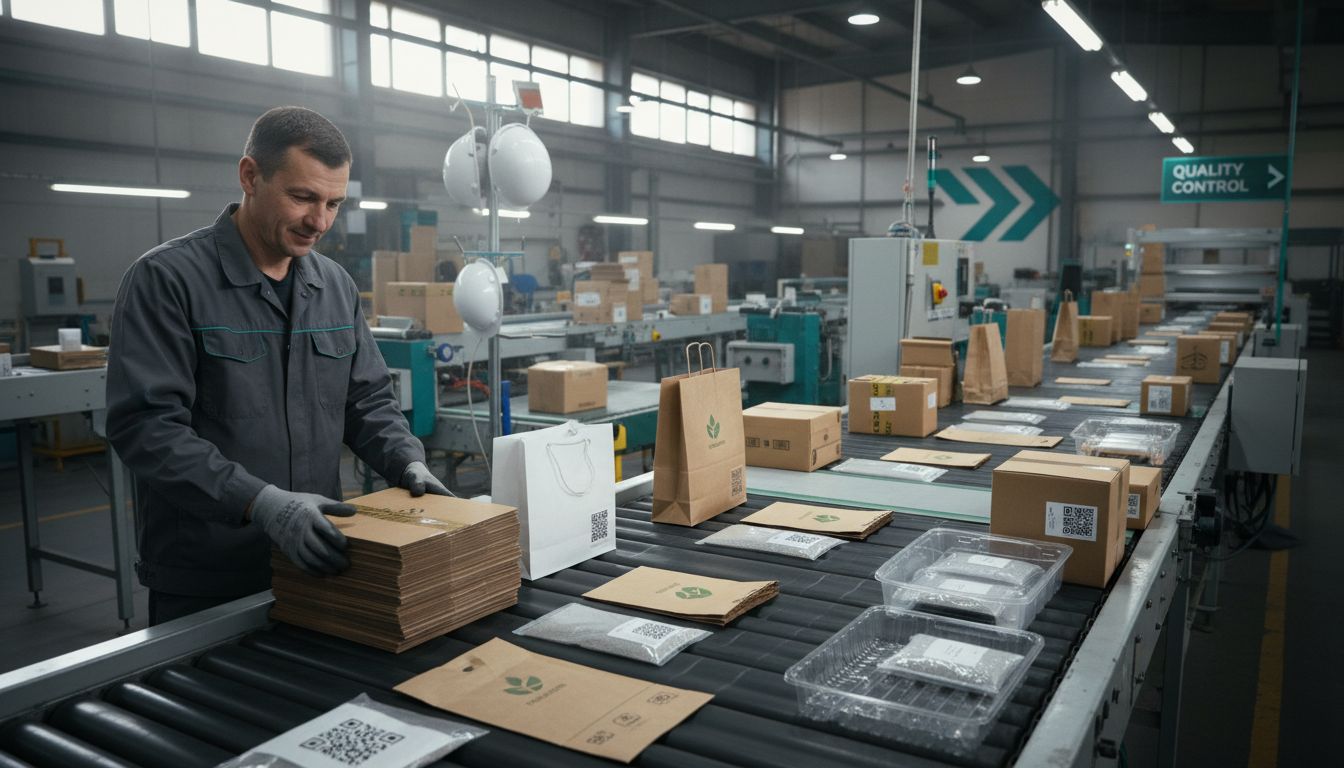
Sustainability is a crucial consideration when choosing packaging materials these days. Paper packaging is recycled more often than plastic, with a recycling rate of 73% compared to 24% for plastic . However, this doesn't seem to fully account for its environmental performance.
Although paper bags are considered environmentally friendly, their production consumes significantly more water and energy than plastic bags . This raises important questions about the true ecological impact of our packaging choices. The environmental impact depends not only on recyclability but also on the entire production process.
When comparing sustainability we need to consider:
Here's an overview of the sustainability properties of paper and plastic:
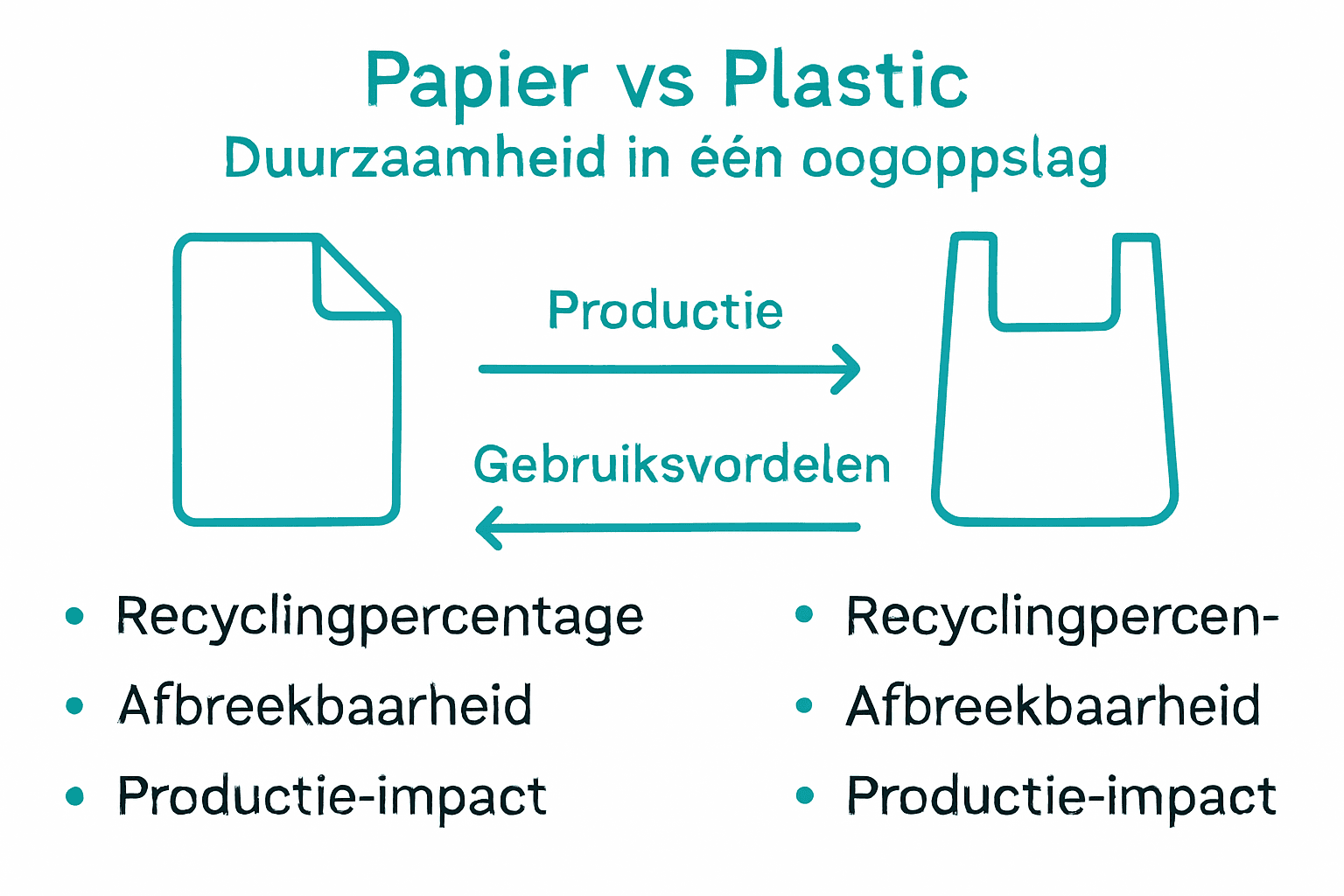
| Characteristic | Paper | Plastic |
|---|---|---|
| Recycling percentage | 73% | 24% |
| Degradability | Biodegradable | Difficult to break down |
| Production energy | High | Low |
| Water consumption | High | Low |
| Reusability | 1.5 times on average | 9 times on average |
| Transport efficiency | Less efficient | Very efficient |
- Energy consumption during production
- Water consumption
- Recycling options
- Degradability
- Reusability
- Transport efficiency
Our conclusion is that sustainability is complex. Paper offers advantages in terms of recycling, but higher production costs. Plastic is more efficient to produce, but more difficult to recycle. The best choice depends on your specific use case and sustainability goals.
Costs, reuse and recycling processes
Packaging costs are a crucial factor in the choice between paper and plastic. Paper bags are generally more expensive to produce than plastic bags and take up more space during transport, leading to higher logistics costs. This economic reality forces companies to carefully consider their packaging strategy.
Interestingly, paper bags are reused an average of only 1.5 times, while plastic bags are reused an average of 9 times. This reuse pattern has significant implications for both costs and environmental impact. The lower reusability of paper packaging can negatively impact overall sustainability and cost-effectiveness.
Recycling processes vary greatly between paper and plastic:
Paper Recycling:
- Easier to recycle
- Higher recycling rates
- Shorter processing cycle
- Less energy intensive
Plastic Recycling:
- More complex separation processes
- Lower recycling rates
- More energy intensive
- Depending on specific plastic type
For businesses and consumers, it's essential to consider not only the initial purchase price but also the total lifecycle costs, reuse potential, and environmental impact. Check out our complete guide to recycling packaging materials for more in-depth insights into this complex topic.
Legal requirements and future developments
Regulations surrounding packaging materials are evolving rapidly in response to environmental challenges. Research shows that single-use paper food packaging is often not a sustainable alternative to plastic due to its limited recyclability and significant environmental impact.
Legal trends are increasingly focusing on sustainability and the circular economy. Companies are required to:
- To develop reusable packaging
- To reduce material use
- To increase recycling rates
- To improve transparency about environmental impact
Future developments will likely focus on:
- Advanced recycling technologies
- Biomaterials as an alternative
- Modular and adaptable packaging solutions
- Digital tracking of packaging life cycles
Explore our guide to reusable packaging to gain insight into the latest regulatory developments and trends shaping the packaging industry.
Comparison: when do you choose which material?
When choosing between paper and plastic packaging, it's crucial to understand the specific usage context. Research shows that paper packaging is recycled more often than plastic, with a recycling rate of 73% compared to 24%. However, this higher recycling rate comes with higher transportation costs and greater CO2 emissions due to the heavier material.
The choice of material depends on several critical factors:
Choose Paper when:
- You need decorative or craft packaging
- Environmental friendliness is a priority
- The product is dry and firm
- You want to personalize the packaging
Choose Plastic when:
- Waterproofing is essential
- Your products need protection
- Cost efficiency is important
- Transparency is desired
Discover alternative packaging materials that can perfectly meet your specific industry needs . The ultimate choice requires careful consideration of functional, economic, and environmental considerations.
Make the right choice between paper and plastic for your packaging
The article clearly highlights the challenges of choosing between paper and plastic packaging. You want a solution that is both sustainable, functional, and attractive. Furthermore, you want to ensure your packaging matches the product while also considering environmental impact and costs. Terms like recycling rate, reuse, and environmental impact illustrate how complex this choice can be.
At Kadopapier.net, we understand these dilemmas and offer a wide range of high-quality paper packaging and matching accessories that are both durable and stylish. Whether you're looking for sturdy kraft paper, elegant tissue paper, or practical gift bags, we have everything you need to perfectly tailor your packaging to your needs and wishes.
Don't wait any longer and make your packaging environmentally conscious and distinctive today. Discover our complete range and benefit from expert advice and fast delivery at Kadopapier.net . Also visit our inspiring page on alternative packaging materials for innovative solutions that will make your packaging stand out. This way, you'll make a conscious choice that strengthens your brand value and supports the environment.
Frequently Asked Questions
What are the main benefits of paper packaging?
Paper packaging is lightweight, biodegradable, easy to recycle, and offers a natural look. It's ideal for dry goods and decorative applications.
Why do some companies choose plastic packaging?
Plastic packaging is water-resistant, has a longer lifespan, and is often more cost-efficient to produce. It also offers protection for products that are sensitive to external influences.
How does the sustainability of paper compare to plastic?
Paper has a higher recycling rate (73% vs. 24%) and is biodegradable, but its production uses more water and energy. Plastic is more efficient to produce but harder to recycle.
When is it better to choose paper over plastic?
Choose paper if environmental friendliness and a decorative appearance are priorities, and if you need products that are dry and durable. Plastic is more suitable if waterproofing and protection are essential.
Recommendation
- Kadopapier.net | Wholesale Gift Wrapping Paper, Bags, and Tissue Paper
- Using Foil or Paper: Understand the Basics and Applications – Kadopapier.net
- The Benefits of Paper Bags: An In-Depth Understanding – Kadopapier.net
- Recycling Packaging Materials: Complete Guide 2025 – Kadopapier.net
- Difference Between Biodegradable & Recyclable: Complete Guide – Earth Saver Straws