


Packaging materials for shops: what, why and how?
Stores don't just use packaging materials to keep their products safe. They also ensure that what you buy looks attractive and is easy to carry. Surprisingly, more and more stores are consciously choosing the material, color, and even texture of their packaging. Why? Because research shows that almost half of Dutch consumers base their purchase decisions on the sustainability of the packaging . Anyone who thinks a box is merely practical is missing the real difference.
Table of contents
- What are retail packaging materials?
- Why are packaging materials important for retail?
- How does the choice of packaging materials contribute to brand identity?
- What types of packaging materials are there and their applications?
- How do sustainability factors influence the choice of packaging materials?
Quick Summary
| Takeaway | Explanation |
|---|---|
| Packaging materials are essential for shops. | They protect, present and transport products, and play a major role in brand image. |
| Sustainability is key in packaging choices. | Consumers are demanding environmentally friendly packaging, forcing companies to make responsible choices. |
| Packaging influences purchasing decisions. | The design and material choices of packaging have a direct impact on how consumers perceive products. |
| Choose packaging based on product type. | The choice of material must take into account product weight, fragility and appearance. |
| Packaging tells a brand story. | By choosing strategic materials, brands can effectively communicate their values and positioning. |
What are retail packaging materials?
Retail packaging materials are essential products used to protect, present, and transport goods. They are a crucial link in the retail and logistics chain, fulfilling not only practical functions but also playing a significant role in brand experience and customer presentation.
Definition and Basic Functions
At their core, packaging materials are specialized materials designed for various purposes within a retail environment. They can be made from a variety of materials, including paper, cardboard, plastic, textiles, and natural fibers. Research into packaging materials shows that these materials fulfill several fundamental functions:
- Protection of products against external influences
- Presentation and aesthetic enhancement of goods
- Suitability for transport and handling
- Information transfer via labels and prints
Types of Packaging Materials
Stores use different types of packaging materials depending on their specific needs. Common categories include:
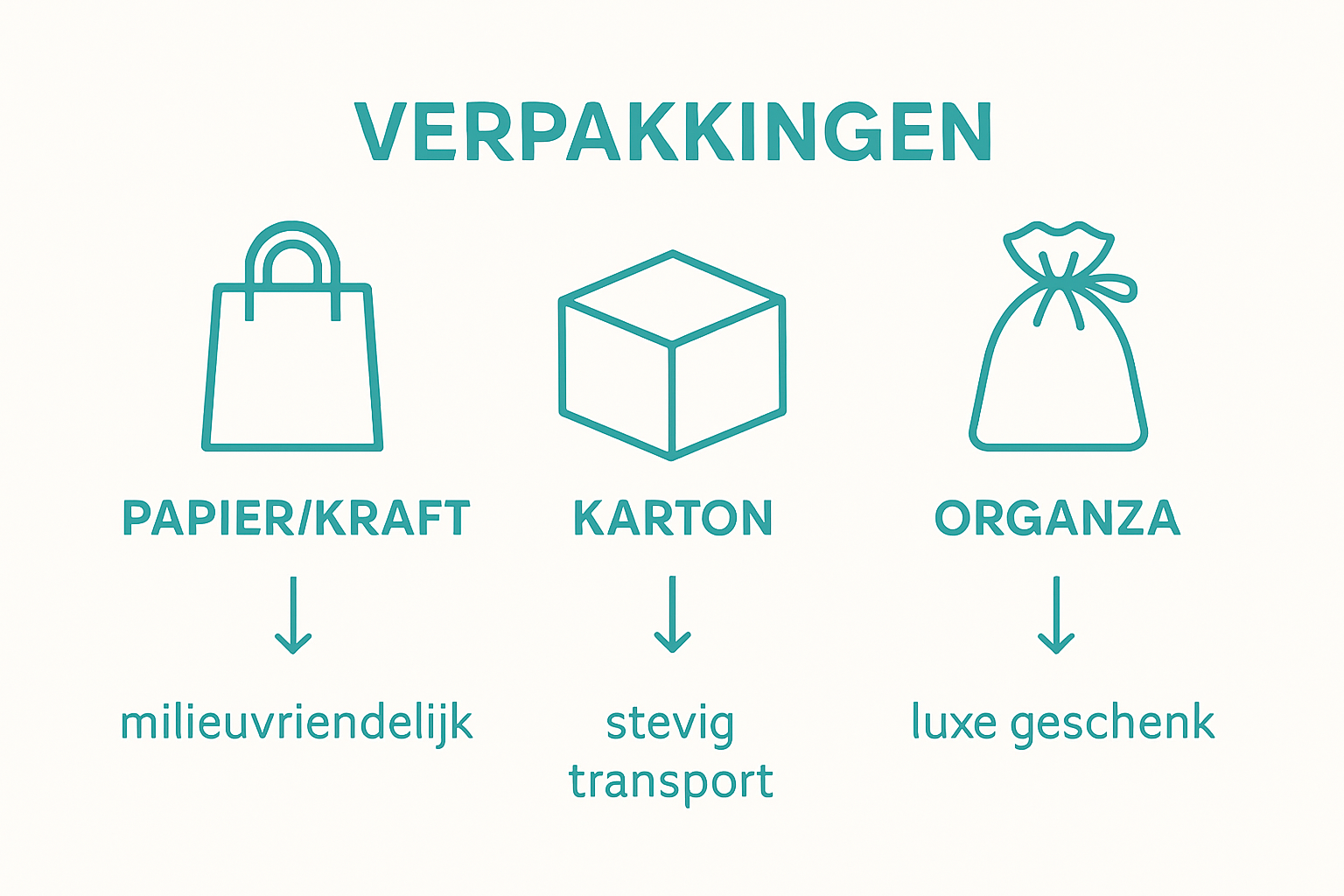
- Cardboard boxes : Ideal for sturdy and protective packaging
- Kraft paper bags : Suitable for portable and lightweight products
- Organza bags : Perfect for elegant gift wrapping and jewelry
- Plastic bags : Widely used for direct customer use
Choosing the right packaging material depends on factors such as product type, weight, fragility, and desired appearance. Good packaging not only protects the product but also tells a story about the brand and its quality.
To provide insight into the different types of packaging materials and their applications, a clear comparison table is provided below.
| Packaging material | Application | Appearance/Characteristic |
|---|---|---|
| Cardboard box | Transport, storage of sturdy or heavy goods | Sturdy, reliable |
| Kraft paper bag | Lightweight, portable products, food | Authentic, sustainable |
| Organza bag | Gift wrapping, jewelry, delicate products | Elegant, refined |
| Plastic bag | Direct customer use, fast packaging | Practical, less sustainable |
| Laminated cardboard | Luxury products, premium presentation | Glossy, professional |
| Paper bag | Food, retail, daily applications | Environmentally friendly, versatile |
| Biodegradable material | Eco-friendly brands, sustainable alternatives | Green, innovative |
Why are packaging materials important for retail?
Packaging materials are much more than just a way to package products. They play a critical role in retailers' strategic operations, combining numerous functions that directly contribute to a company's success.
Commercial Interest and Brand Identity
Packaging is a powerful communication tool for stores. It represents the first physical point of contact between a product and a potential customer. Consumer research shows that packaging design and material selection directly influence purchasing decisions. Well-designed packaging can strengthen brand perception, increase recognition, and convey a sense of quality and professionalism.
Practical Protection and Logistical Efficiency
Packaging materials perform essential protective functions :
- Protect products from damage during transport
- Extend the shelf life of fragile goods
- Reduce the risk of loss and returns
- Facilitate storage and distribution processes
These protective properties are crucial for minimizing economic losses and ensuring product quality. Moreover, smart packaging solutions help stores optimize their logistics costs.
Sustainability and Customer Experience
Sustainability is playing an increasingly important role in retail today. Modern consumers expect environmentally conscious solutions. By choosing reusable packaging options like organza bags, stores can reduce their environmental footprint while simultaneously improving the customer experience. Sustainable packaging materials demonstrate a commitment to corporate social responsibility and can positively impact brand value.
How does the choice of packaging materials contribute to brand identity?
The selection of packaging materials is much more than a practical decision. It's a strategic choice directly related to how a brand presents itself and communicates with its target audience.
Visual Communication and Brand Values
Packaging materials are a powerful visual communication tool that can instantly convey a brand's values and personality. Research in the Journal of Product & Brand Management highlights how packaging design and material selection directly contribute to brand differentiation and consumer perception.
Different materials tell different stories:
- Kraft paper communicates authenticity and sustainability
- Glossy laminated cardboard exudes luxury and professionalism
- Recycled materials emphasize environmental awareness
- Delicate organza bags suggest refinement and elegance
Emotional Connection and Brand Experience
The tactile experience of packaging creates an immediate emotional connection with the customer. The texture, weight, and quality of the packaging material influence how consumers perceive the product and the brand. A carefully chosen material can evoke feelings of trust, excitement, or nostalgia.

Strategic Brand Positioning
Packaging materials serve as silent ambassadors for a brand. They subtly communicate core values and distinguishing features. A sustainable brand, for example, will opt for environmentally friendly packaging, while a luxury brand might choose premium materials with a refined finish. By consciously choosing specific packaging materials, brands can strengthen their positioning and differentiate themselves in a competitive market.
What types of packaging materials are there and their applications?
Packaging materials are a complex and dynamic world with countless options for different purposes. The right choice depends on specific product characteristics, transport conditions, and brand objectives.
Traditional Packaging Materials
Paper and cardboard remain the dominant packaging materials in retail. European research shows that paper and cardboard account for approximately 40% of all packaging materials. Their versatility makes them popular for countless applications:
- Cardboard boxes for transport and storage
- Paper bags for food and retail
- Folding cardboard for jewelry and small products
- Kraft paper for sustainable and rustic packaging
Innovative and Modern Materials
Modern packaging technologies introduce advanced materials with unique properties. Smart and functional packaging is rapidly gaining ground :
- Biodegradable materials for environmentally conscious brands
- Nanomaterials that extend food quality
- Laminated packaging with enhanced protective layers
- Transparent organza bags for delicate products
Sustainability and Future Perspective
The packaging industry is rapidly evolving toward more sustainable solutions. Materials are increasingly being designed to minimize environmental impact while offering maximum protection and presentation. Future packaging materials will likely place even greater emphasis on reuse, recycling, and innovative, environmentally friendly approaches.
How do sustainability factors influence the choice of packaging materials?
Sustainability is no longer an optional consideration, but a fundamental strategy in modern packaging choices. Companies are increasingly driven by environmentally conscious consumers and stricter regulations to rethink their packaging strategies.
Consumer Perception and Behavior Change
The role of consumers in sustainable packaging choices is crucial . Research into consumer behavior shows that almost half of Dutch consumers explicitly consider sustainability aspects when choosing products. This changing awareness forces companies to be more transparent and environmentally friendly in their packaging approaches.
Important considerations for consumers include:
To clarify how consumers assess sustainability aspects and which factors they consider important, below you will find an overview of the most important sustainability criteria from the article.
| Sustainability criterion | Description |
|---|---|
| Reusability | Can the packaging be reused by the consumer? |
| Recyclability | Is the material suitable for recycling? |
| Biodegradable | Does the packaging decompose without harming the environment? |
| Less plastic use | Does the packaging contain as little plastic as possible? |
| Transparency about environmental impact | Is it clear how sustainable the material and production process are? |
- Reusability of packaging materials
- Degree of recyclability
- Use of biodegradable materials
- Reduction of plastic use
- Transparency about environmental impact
Technological Innovations and Materials Evolution
Technological advances play a key role in sustainable packaging development. Modern material innovations focus on creating solutions that are both functional and environmentally friendly. Promising developments include:
- Biomaterials produced from plant sources
- Reduced Carbon Footprint Packaging
- Organza bags made from recycled materials
- Intelligent packaging that combats food waste
Regulatory Pressure and Future Prospects
Governments and international bodies are increasing pressure on companies to develop more sustainable packaging solutions. In the coming years, companies are expected to face increasingly strict regulations forcing them to produce more environmentally friendly products. This requires continuous innovation and a fundamental shift in thinking about packaging materials.
Give your store a head start with smart packaging materials
Want to better protect your products while simultaneously making your brand stand out? Have you noticed that the right packaging not only prevents damage but also attracts customers? This article emphasizes the importance of choosing packaging materials that are both practical and distinctive. Whether you're aiming for a sustainable look, a striking presentation, or simply more efficient logistics, at Kadopapier.net you'll find the perfect selection to meet all your needs. Think of a wide range: from wrapping paper, tissue paper, and gift bags to luxurious ribbons and beautiful decorations for shops or gift projects.
Don't wait for customers to look elsewhere. Explore our selection today and find exactly what suits your brand identity. Choose convenience and quality and order quickly and easily through our website. Get inspired by the possibilities and give your store presentation an instant, professional upgrade.
Frequently Asked Questions
What are the main functions of retail packaging materials?
Packaging materials protect products, present them aesthetically, facilitate transport and handling, and provide information through labels.
What types of packaging materials are there and what are they used for?
There are different types of packaging materials such as cardboard boxes, kraft paper bags, organza bags and plastic bags, each suitable for different products and purposes.
Why are packaging materials important for brand identity?
Packaging materials communicate a brand's values and influence customer perception through visual communication and emotional connection.
How do sustainability considerations influence the choice of packaging materials?
Sustainability plays a central role, with consumers increasingly choosing reusable and recycled materials, forcing companies to develop environmentally friendly packaging solutions.
Recommendation
- Moss Green Organza Bag - Elegant packaging for any occasion – Kadopapier.net
- Lavender organza bags for stylish gifts - Shop now – Kadopapier.net
- Light blue organza bags for elegant gifts - Shop now – Kadopapier.net
- Cobalt organza bags for elegant gifts - Shop now – Kadopapier.net
- Window Frame Material Selection: Understand the Best Options
- Google Ads Auction Mechanism Explained: Understand It Now – Ecomtrada | Google Ads Agency | Den Helder