


Food-Safe Packaging: Understand the Basics and Beyond
Food-safe packaging is everywhere and makes an unnoticed difference in everything we eat. Many people think a plastic container or glass jar is mainly convenient for storing food. But don't be alarmed. Manufacturers must conduct extensive testing to ensure their packaging doesn't leach any hazardous substances into our food. So, this isn't just about convenience; it's about our health and what we ultimately eat.
Table of contents
- What is food-safe packaging?
- Why is food-safe packaging important?
- How is food-safe packaging produced?
- Key materials and technologies for food-safe packaging
- The impact of food-safe packaging on health and the environment
Short Summary
| Takeaway | Explanation |
|---|---|
| Protect food packaging against harmful substances | They are designed to ensure food safety and prevent contamination. |
| Strict legal standards are crucial | Packaging must comply with European and national regulations to ensure safety. |
| Quality marks guarantee packaging safety | Look for official certifications to ensure the suitability of materials for food contact. |
| Sustainable packaging reduces environmental impact | Innovations focus on recyclability and the use of sustainable materials. |
| Advanced technologies improve food preservation | Technologies such as active and smart packaging extend shelf life and reduce waste. |
What is food-safe packaging?
Food-safe packaging is a specialized material specifically designed to protect food without releasing harmful substances. This packaging plays a crucial role in maintaining food safety and quality during storage, transport, and distribution.
The Basics of Food Safe Materials
Food-safe packaging must meet strict legal requirements. According to the Netherlands Nutrition Centre , this packaging is designed to fulfill two primary functions:
- Protection of food against external contaminants
- Maintaining food quality and freshness
The materials are carefully selected to ensure they do not release any chemicals harmful to human consumption. Commonly used food-safe materials include:
The overview below summarizes the main materials for food-safe packaging, including their core characteristics and typical applications.
| Material | Features | Typical applications |
|---|---|---|
| Polypropylene (PP) | Heat resistant, chemically stable | Containers, foil, bottles |
| Polyethylene (PE) | Flexible, good barrier properties | Foils, bags, bottles |
| Coated cardboard | Biodegradable, coated against moisture | Takeaway boxes, beverage packaging |
| Glass | Inert, reusable | Pots, bottles |
| Metal | Sturdy, fully lockable | Cans, sealed packages |
| Special food film | Protective, airtight | Bread, cold cuts, cheese |
- Food-safe plastic (such as PP and HDPE)
- Coated cardboard
- Special food film
- Glass containers
Legal Standards and Quality Control
The RIVM emphasizes that food contact materials must comply with strict European and Dutch legislation. Manufacturers must conduct detailed testing to ensure their packaging cannot transfer hazardous substances to food.
The key aspects of these controls include:
- Migration measurements of potentially harmful substances
- Chemical stability of packaging materials
- Safety under different temperature and storage conditions
When choosing food-safe packaging, it's essential to pay attention to official quality marks and certifications that guarantee the safety of the material. Read more about packaging materials for a deeper understanding of the available options.
Why is food-safe packaging important?
Food-safe packaging is an essential part of modern food production and distribution. It not only protects food but also contributes to the health and safety of consumers.
Below is a schematic overview of the core benefits of food-safe packaging related to public health, economics, and the environment.
| Advantage | Description |
|---|---|
| Health | Prevents contamination and chemical migration |
| Economic | Extends shelf life and reduces food waste |
| Environment | Reduces waste through longer shelf life |
| Legal & Ethical | Complies with regulations, protects consumers and strengthens confidence |
| The importance of these packages goes much further than a simple protective layer. |
Protection of Food Safety
According to research by Food Safely , food-safe packaging fulfills critical functions in the food chain:
- Protect against bacterial contamination
- Preventing chemical contamination
- Slowing down natural spoilage processes
Health risks are significantly reduced when packaging meets strict safety standards. This means that harmful chemicals don't have a chance to transfer to food.
Economic and Environmental Benefits
Food contact materials also have broader implications. They contribute to:
- Reducing food waste
- Extending the shelf life of products
- More efficient distribution and transport
The protective properties of this packaging allow food to be kept fresh for longer and transported over longer distances without loss of quality.
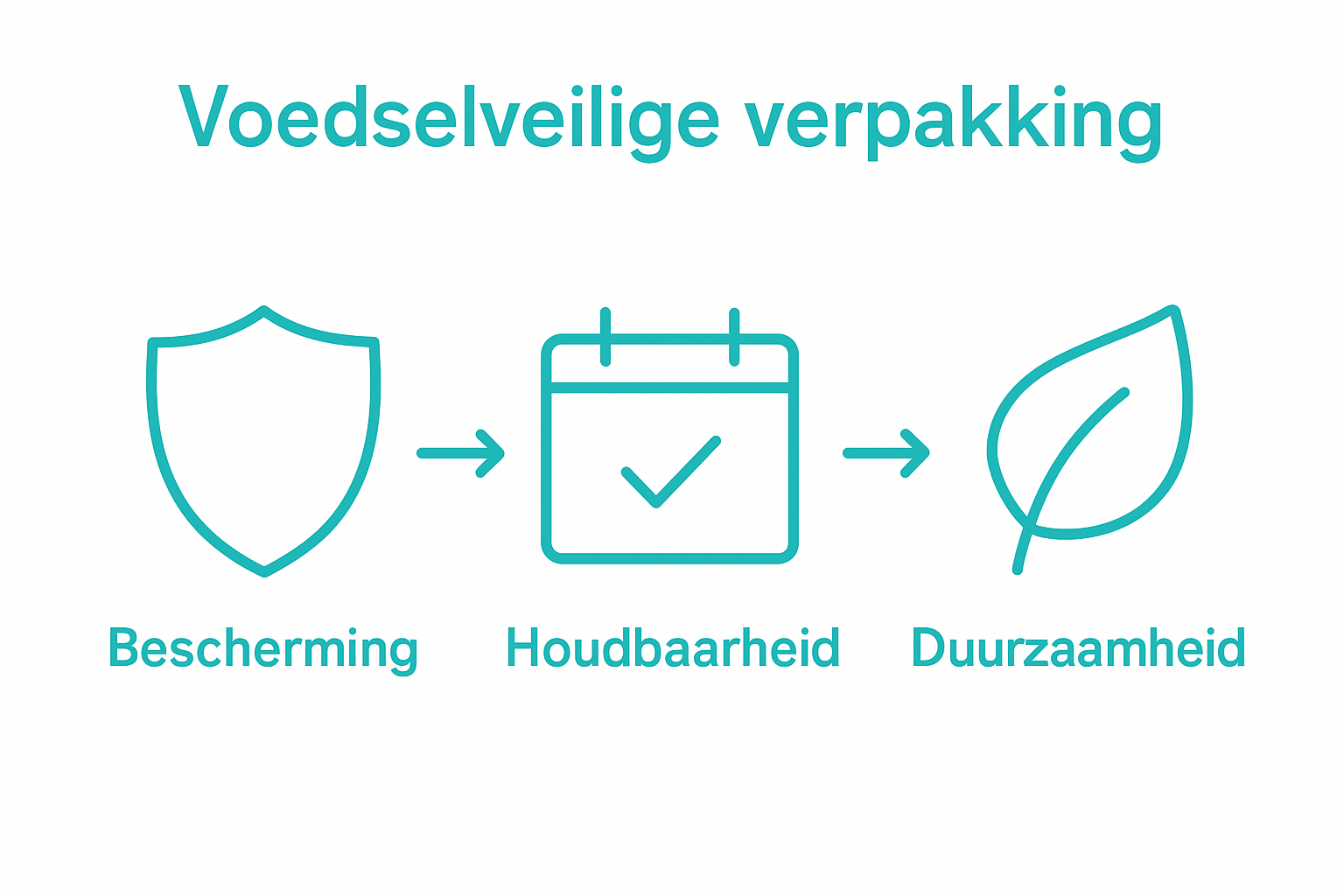 Discover our packaging solutions that support these principles.
Legal and Ethical Responsibility
Food-safe packaging is not only a technical necessity but also a legal and ethical obligation. Manufacturers must ensure that their packaging materials do not pose a risk to public health. This requires continuous monitoring, research, and compliance with strict international standards.
How is food-safe packaging produced?
The production of food-safe packaging is a complex and precise process involving several advanced technological steps and strict quality controls. The goal is to create materials that are absolutely safe for food preservation and pose no risk to human health.
Raw material selection and material development
According to research by the Knowledge Institute for Sustainable Packaging, the production process begins with a careful selection of raw materials. Manufacturers must use materials that are completely free of harmful chemicals . The most important considerations are:
- Chemical stability of the material
- Resistance to different temperatures
- Minimal migration of chemical components
Materials used include high-quality plastics such as polypropylene (PP), polyethylene (PE) and special food-safe coatings.
Advanced Production Techniques
Modern production methods for food-safe packaging focus on precision and safety. Techniques such as extrusion, injection molding, and lamination are used to form materials that meet the strictest safety standards. Each production stage is subject to detailed quality controls :
- Pre-testing of raw materials
- Continuous monitoring during manufacturing process
- Final checks for possible chemical migration
These advanced techniques ensure that the packaging is not only functional but also completely safe for food storage. Discover our advanced packaging solutions that meet these highest standards.
Scientific Validation and Certification
The final and crucial stage in the production of food-safe packaging is scientific validation. Specialized laboratories conduct extensive testing to ensure that the packaging:
- Do not release harmful substances
- Remain stable under different conditions
- Comply with international food safety standards
Only packaging that passes these rigorous tests receives official certifications confirming its suitability for food storage.
Key materials and technologies for food-safe packaging
The development of food-safe packaging is a dynamic field that is constantly evolving with new materials and advanced technologies. The goal is to create solutions that are not only safe, but also sustainable and functional.
Innovative Packaging Materials
According to research by Food Safely , the most common food-safe materials are:
- High-quality plastics such as polypropylene (PP) and polyethylene (PE)
- Specialized food-safe coatings
- Glass
- Metal
- Paper and cardboard with special treatments
Each material has unique properties that enhance food protection and preservation. Modern materials are developed to create barriers against oxygen, moisture, and microorganisms.
Advanced Packaging Technologies
New technologies are transforming the way we package food. Innovative approaches include:
- Modified Atmosphere Packaging (MAP)
- Active packaging systems
- Smart packaging with sensors
- Nanotechnology for better protection
These technologies enable us to keep food fresh longer and improve safety. Discover our advanced packaging solutions for greater insight.
Sustainability and Future Prospects
The packaging industry is increasingly focusing on sustainable solutions. Research efforts are focused on developing materials that:
- Be easily recyclable
- Use fewer raw materials
- More environmentally friendly production processes have
The future of food-safe packaging lies in finding a balance between maximum food protection, minimal environmental impact, and optimal user-friendliness.

The impact of food-safe packaging on health and the environment
Food-safe packaging plays a complex role in our modern society, with far-reaching consequences for both human health and environmental impact. It forms a critical link between food safety, consumer protection, and sustainability goals.
Health aspects
According to research by Milieu Centraal, food-safe packaging is essential for protecting consumers from potential health threats. Two critical protective mechanisms are:
- Preventing bacterial contamination
- Blocking harmful chemical migration
Modern packaging technologies allow food to remain safe and fresh for longer, significantly reducing the risk of foodborne illness. Scientific research shows that advanced packaging can help minimize health risks.
Environmental considerations
The environmental impact of food packaging is complex and requires a nuanced approach. Several aspects play a role :
- Reducing food waste through longer shelf life
- Challenges surrounding recycling and waste processing
- Development of more sustainable materials
Despite its environmental impact, food packaging can also contribute positively by reducing the overall environmental impact through food waste. Discover our sustainable packaging solutions that strive for this balance.
Future Challenges and Innovations
The packaging industry faces the challenge of developing packaging that is both safe for health and minimally harmful to the environment. Innovative directions include :
- Development of biodegradable materials
- Circular packaging concepts
- Smart design for minimal material requirements
These innovations will be crucial in finding a balance between food safety, health protection and environmental responsibility.
Choose certainty with food-safe packaging from Kadopapier.net
Are you unsure about ensuring food safety during packaging? You've read in the article how important food-safe packaging is for protecting food from unwanted substances and bacteria. Choosing the right materials is no small step, and the consequences of a wrong choice can be significant, both for your customers and for your brand trust.
Don't let go of your worries. Discover the wide range of high-quality packaging materials at Kadopapier.net , where you can always be sure you're choosing quality and reliability. Looking for practical inspiration and immediately applicable solutions for your business or project? Browse our current collections of gift bags or discover our collection of professional wrapping paper . Switch to food-safe packaging today and give your products the best. Don't wait any longer and order directly from Kadopapier.net for maximum security and customer satisfaction.
Frequently Asked Questions
What is food-safe packaging?
Food-safe packaging is a material specifically designed to protect food from contamination and prevent harmful substances from contaminating it. It is essential for maintaining food safety and quality.
Which materials are commonly used for food-safe packaging?
Common materials for food-safe packaging include food-safe plastics such as polypropylene (PP) and polyethylene (PE), coated paperboard, specialty food film, and glass containers.
How is food-safe packaging produced?
The production of food-safe packaging involves the careful selection of raw materials free of harmful substances. Advanced production techniques such as extrusion and injection molding are used, with strict quality controls for chemical migration.
Why is food-safe packaging important for health and the environment?
Food-safe packaging protects consumers from bacterial and chemical contamination, reducing the risk of foodborne illness. It also reduces food waste by extending the shelf life of products, which is also beneficial for the environment.