


What is Cellophane: Uses and Benefits for Packaging
More and more companies and consumers are consciously choosing sustainable packaging, with cellophane being seen worldwide as a versatile alternative to conventional plastic. Transparency, flexibility, and biodegradability make cellophane a smart choice for both the hospitality and creative sectors. Understanding the origins, production, and unique properties of this material helps you make smarter choices and select the right type of cellophane for every application.
Table of contents
- What is cellophane and how is it made?
- Different types and qualities of cellophane
- Key Features and Benefits of Use
- Applications in packaging and decoration
- Environmental impact, sustainability and alternatives
Key Points
| Point | Details |
|---|---|
| Cellophane is a versatile packaging material | It is made from regenerated cellulose and offers unique properties such as transparency and flexibility. |
| Various qualities and types available | Cellophane comes in varieties such as standard, reinforced, and food-resistant, each with their own uses. |
| Environmental friendliness and sustainability | Cellophane is fully compostable and made from renewable resources, making it an attractive choice for sustainable packaging. |
| Applications in multiple industries | It is used in the food industry, cosmetics and for gift packaging, making it an important material in the modern packaging world. |
What is cellophane and how is it made?
Cellophane is an exceptionally versatile and transparent packaging material that has played an important role in the world of packaging and preservation for years. Cellophane is a thin, transparent material made from regenerated cellulose, used in a variety of applications.
Cellophane production begins with the collection of pure cellulose , typically extracted from wood pulp or cotton. Through a complex chemical process, this cellulose is transformed into viscose, a viscous liquid that is then stretched and hardened into a transparent, flexible material. Knowledge of material production tells us that this process results in a material with unique properties: smooth, shiny, and exceptionally strong.
The advantages of cellophane are numerous. The material is particularly suitable for packaging because it:
- Transparent, so the content remains visible
- Antibacterial is
- Provides protection against moisture and grease
- Is fully recyclable
Today, cellophane is used in various industries, from food to cosmetics and gift wrapping. Whether you're thinking of wrapping chocolate, flower packaging, or sealing food, cellophane is an indispensable material in our modern world of packaging and protection.
Different types and qualities of cellophane
Cellophane is a versatile material available in numerous varieties, each with specific properties and applications. Bakeplus confirms that cellophane is available in various forms, such as sheets and rolls, with varying thicknesses and sizes.
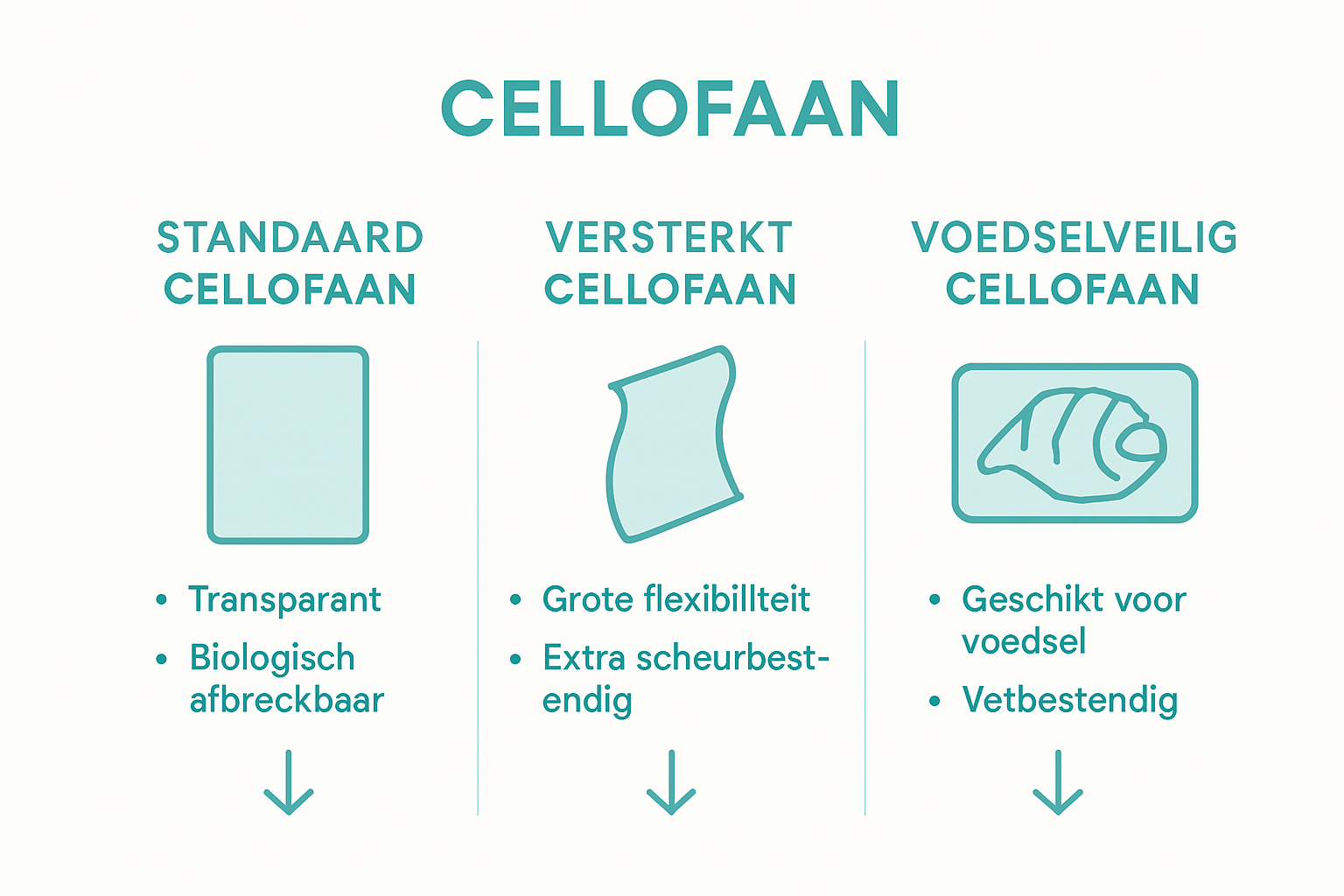
The main quality categories of cellophane can be divided into:
- Standard transparent cellophane: Suitable for light packaging
- Reinforced cellophane: With extra protective properties
- Colored cellophane: For decorative applications
- Food-resistant cellophane: Specially developed for food packaging
When selecting the right type of cellophane, it's important to consider the specific requirements. Packaging ribbons, for example, can be perfectly combined with different types of cellophane to enhance the packaging's appeal.
The choice of a specific type of cellophane depends on factors such as desired transparency, strength, flexibility, and level of protection. Professionals in industries such as food, gift packaging, and retail select cellophane with the utmost care to optimize the quality and presentation of their products.
Key Features and Benefits of Use
Cellophane has several unique properties that make it an excellent packaging material for various applications. Its transparency and flexibility make it a popular choice for both professional and consumer users. Paper versus plastic packaging illustrates how cellophane differs from other packaging materials.
The main advantages of cellophane are:
- Transparency : Products remain fully visible
- Humidity control : Protects products against moisture
- Environmental friendliness : Biodegradable material
- Light and flexible : Easy to handle and shape
- Hygienic : Protects products against external contamination
Professionals in various industries value cellophane for its versatility. From food producers to gift wrappers, everyone finds specific applications where cellophane's unique properties are crucial. The material not only protects the product but also enhances the packaging's visual appeal.

When choosing cellophane, it's essential to consider the specific requirements of the product you want to package. Factors such as moisture sensitivity, desired transparency, and the level of protection play a crucial role in selecting the right type of cellophane for your specific application.
Applications in packaging and decoration
Bakeplus confirms that cellophane is a versatile material, ideal for packaging delicate foods like cookies, bonbons, and chocolate. Its transparency and protective properties make it a popular choice for professional packaging that is both aesthetic and functional.
The areas of application for cellophane are wide and varied:
- Food Gifts : Packaging of chocolate and pastries
- Flower packaging : Protecting and decorating bouquets
- Gift packaging : Professional finishing of gifts
- Industrial packaging : Protection of delicate products
- Decorative purposes : Crafts, crafts and DIY projects
Packaging as a marketing tool demonstrates how cellophane is not only functional but can also contribute to the visual appeal and brand experience of products. Professional packagers appreciate the opportunity to present products attractively and securely.
When considering using cellophane, it's important to consider the specific properties of the product. Whether for food packaging, flower arranging, or creative projects, cellophane offers a transparent, lightweight, and versatile solution that's both practical and decorative.
Environmental impact, sustainability and alternatives
Saxion University emphasizes that cellophane is one of the oldest biopolymers, made from pure cellulose, and is considered an environmentally friendly material. However, the production process still requires many organic solvents, which somewhat complicates its sustainability performance.
The environmental properties of cellophane include:
- Fully compostable
- Made from renewable resources
- Biodegradable
- Lower carbon footprint than synthetic plastics
- Natural origin
Alternative packaging materials can complement cellophane, but it remains an attractive option for environmentally conscious consumers. Researchers from the Flemish Parliament point out that with a thin layer of aluminum oxide, cellophane remains highly compostable and offers an environmentally friendly alternative to conventional plastic film.
For businesses and consumers who take sustainability seriously, cellophane offers a promising option. Continuous technological improvements in the production process are expected to further reduce environmental impact, making cellophane an increasingly attractive material for responsible packaging solutions.
Discover the Power of Cellophane for Your Packaging
Cellophane offers a unique combination of transparency, hygiene, and environmental friendliness for packaging your products. Do you recognize the challenge of finding packaging that not only protects but also enhances the appearance of your gifts or food products? Without the right packaging material, your presentation loses its flair and protection is often lacking. Therefore, it's important to choose high-quality materials that meet these specific needs.
At Kadopapier.net, you'll find a wide range of products that perfectly complement the benefits of cellophane. Enhance the appeal of your gift wrapping with our matching ribbons and decorations, and create a professional look that will impress your customers. For sustainable, flexible, and attractive packaging solutions that make a difference, visit our online store.
Don't wait any longer and take advantage of the versatility of cellophane combined with our high-quality packaging products today. Visit Kadopapier.net and discover how easy it is to optimize your packaging with materials that protect and present in one. Let your packaging do the talking and ensure your products truly stand out.
Frequently Asked Questions
What is cellophane and what is it used for?
Cellophane is a thin, transparent material made from regenerated cellulose. It is used for various packaging, such as food, flowers, and gifts.
What are the benefits of cellophane as a packaging material?
Cellophane has several advantages: it is transparent, antibacterial, moisture and grease resistant, and also completely recyclable.
What types of cellophane are available?
Cellophane comes in different types, such as standard transparent, reinforced, colored and food-resistant cellophane, each with specific properties for different applications.
Is cellophane environmentally friendly?
Yes, cellophane is an environmentally friendly material because it's fully compostable and made from renewable resources. It has a lower carbon footprint than most synthetic plastics.
Recommendation
- Ways to Use Tissue Paper – Kadopapier.net
- Top Gift Bag Wholesale - Best Comparisons 2025 - Kadopapier.net
- Top wrapping paper for shops – Expert comparison 2025 – Kadopapier.net
- Tissue Paper as Filler: Understand and Use It Wisely – Kadopapier.net
- 7 Eco Friendly Clothing Materials Every Business Should Know – The Ocean Straw